
38th Annual Cold Regions Research Centre (CRRC) Student Conference
The Cold Regions Research Centre (CRRC) is hosting its 38th annual student conference Jan. 28-30, 2026.
We are excited to invite students from all research stages and early-career researchers to share their research. Presentations will include oral presentations, poster presentations, and 3-minute highlight talks.
The CRRC student conference also consists of a keynote, an art workshop, a drone demonstration workshop, and a social event.
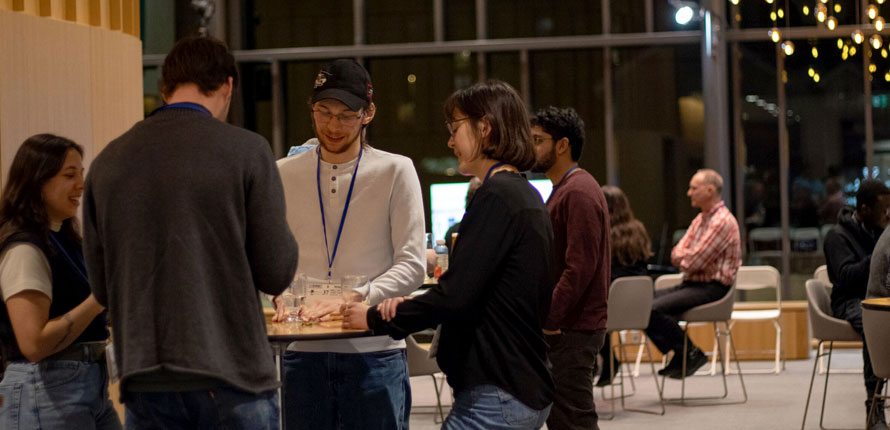
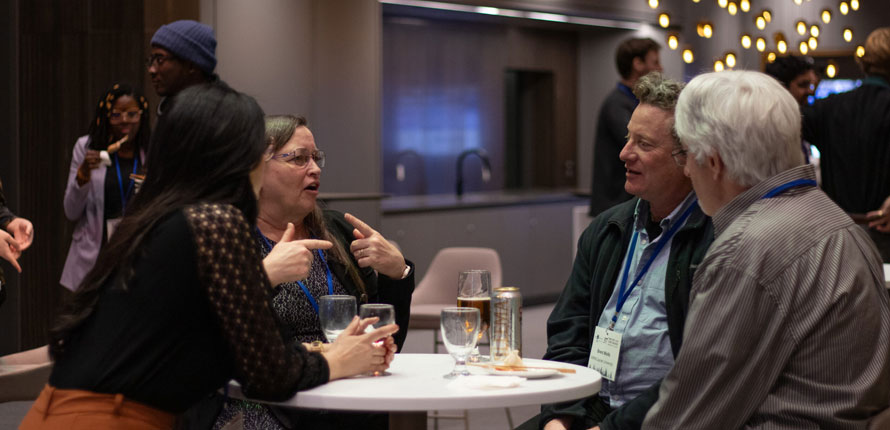
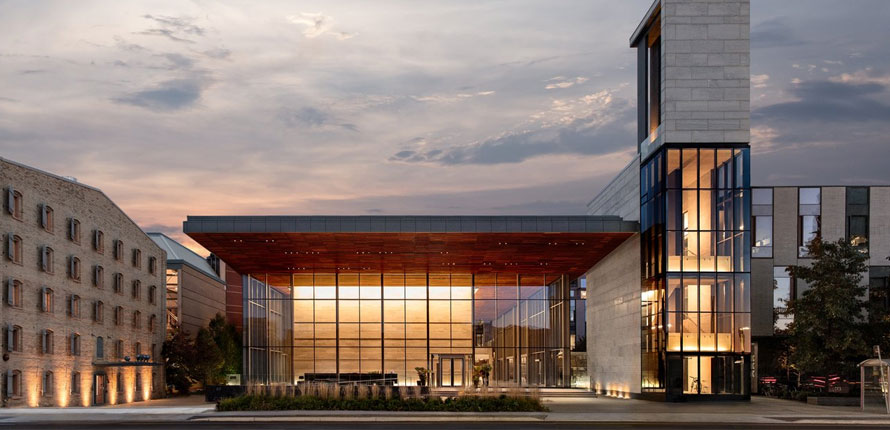
Conference Venues
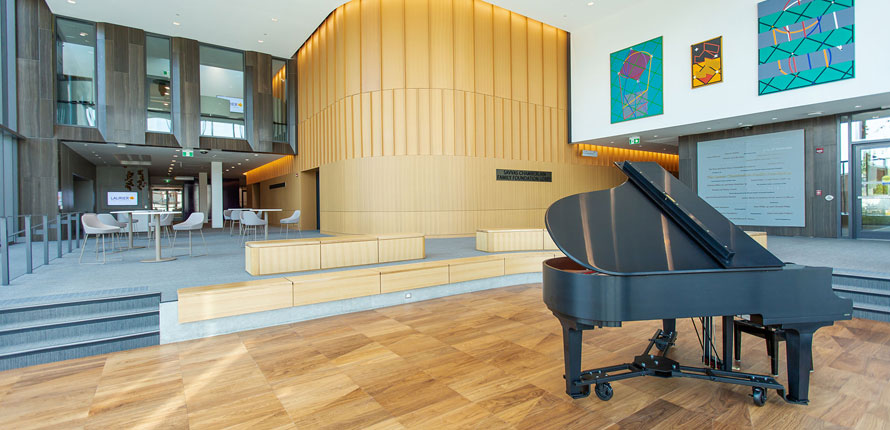
Icebreaker Venue: Jan. 28, 2026
Savvas Chamberlain Music Building
75 University Ave. W., Waterloo, ON, N2L3C5
Award Winners
CRRC is proud to announce the winners of the 38th Annual CRRC Student Conference.
Oral Presentation Awards
First place: Madeline Patenall from Wilfrid Laurier University for their talk on “Arsenic, antimony and phosphorus cycling varies across subarctic lakes with diverse municipal and mining impacts.”
Second place: Evan Bennett from Western University for their talk on “Effects of temperature on the dispersal of the Rocky Mountain apollo butterfly (Pamassius smintheus).”
3-Minute Thesis Awards
First place: Danielle Martin from the University of Toronto for their talk on “Applying a bacterial lipid paleothermometer proxy to strengthen understandings of past climate variability in northwestern North America.”
Second place: Nicola Rammell from Wilfrid Laurier University for their talk on “Linking disease probability to growth history in aspen forests of central Yukon Territory.”
Poster Presentation Awards
First place: Karolina Czuba from Wilfrid Laurier University for their poster titled “Physiological stress in rainbow trout across different severities of sea lamprey-inflicted parasitism.”
Second place: Emma Bacchiochi from the University of Waterloo for their poster titled “Has natural gas development altered sediment metal concentrations in Fisherman Lake, NWT?”
Featured Programming
Keynote Speaker: Professor Emeritus Ken Van Rees
Collisions of Science and Art: the Road to Trail Valley Creek
Have you ever wondered why science and art seem to be kept separate from each other? This talk will higlight my journey from a scientist into an artist and how art was incorporated into my soil science field courses, how a wildfire burnt my research plot to open a new door to charcoal art, and how interpreting research from water and climate scientists using art led me to Trail Valley Creek Arctic Research Station.
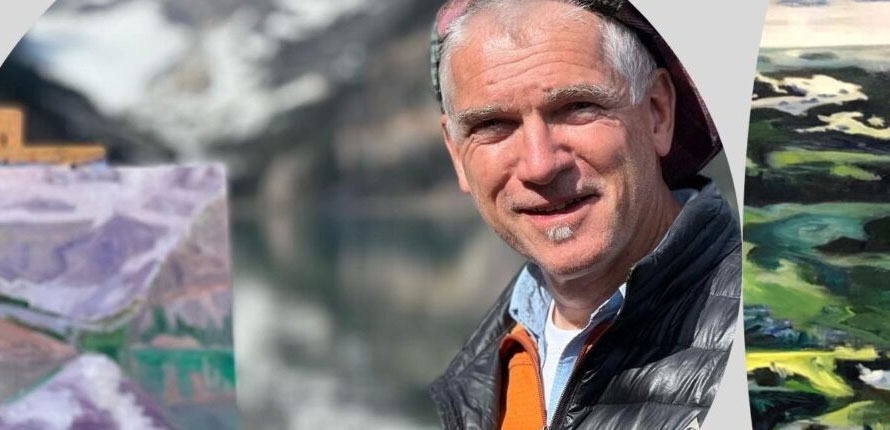
Art Workshop: Exploring the Intersection of Science and Art
By: Dr. Ken Van Rees
In this unique and thought-provoking workshop, we invite students to explore the connection between their scientific work and the world of visual art. This is not a traditional art class, but rather an opportunity for you to reflect, imagine, and express your research or academic experience through an artistic lens.
Participants are welcome, but not required, to bring a photo from their fieldwork or any image that resonates with their academic journey. These visual prompts can help spark inspiration but are entirely optional. The workshop will guide students in exploring the emotional, aesthetic, and conceptual dimensions of their scientific practice through art.
All materials will be provided. Registration is limited to 30 participants.

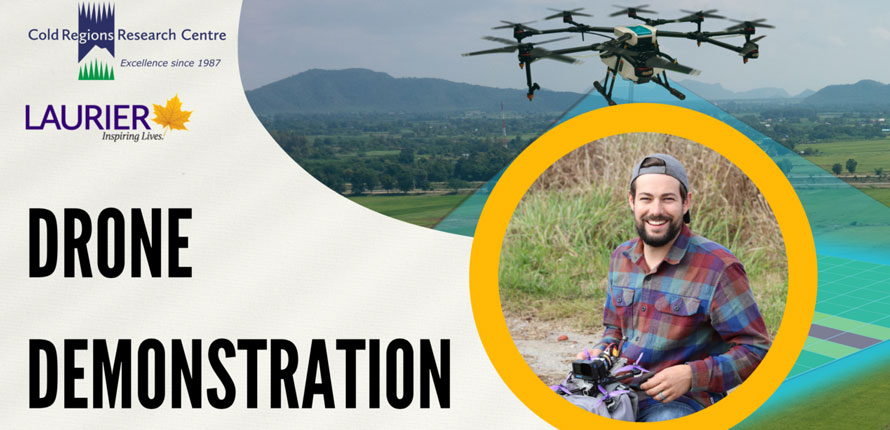
Drone Demonstration Workshop with Brandon Walker
Are you interested in learning how drones work? This year, CRRC is offering a drone demonstration workshop with Branden Walker. Spots are limited for this workshop, so be sure to sign up through the registration form by Jan. 12, 2026.
Session Topics
Permafrost and Cryosphere
Exploring the dynamics of frozen landscapes and their critical role in regulating climate, hydrology, and northern ecosystems.
Hydrology and Water Quality
Examining water movement, quality, and biogeochemical processes across freshwater systems under a changing climate.
Biologic and Aquatic Ecosystems
Investigating biological processes and aquatic ecosystem responses to environmental change and human pressures.
Wildlife and Ecosystem Conservation
Assessing species, habitats, movement and conservation strategies to sustain ecosystem resilience and biodiversity.
Remote Sensing and Modelling
Advancing Earth system understanding through satellite observations, data integration, and predictive modelling approaches.
Wildfire and Disturbances
Understanding the impacts of wildfire and environmental disturbances on landscapes, ecosystems, and climate feedbacks.
Conference Program Volunteers
- Lauren Best
- Lan Yi
- Arash Rafat
- Mackenzie Mihorean
- Nicola Rammell
- Regan Murray
- Emilie Knighton
- Mustajab Khalid
- Amber Buston-White
- Sarah Kowalczyk
- Jayden Nyaberi
- Abbeneet Binning Bath
- Megan Cullen
- Karelia Del Piero
- Andy Sekoh